
Plausible
Simple, privacy-first web analytics dashboard
What is Plausible?
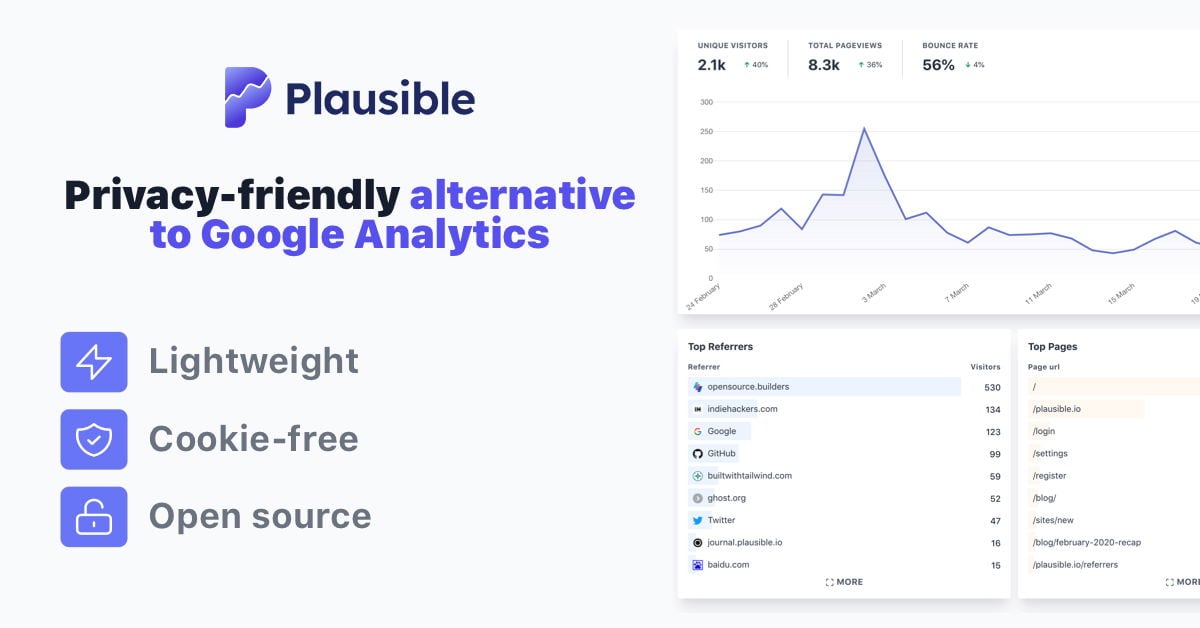
Try PlausiblePlausible is a privacy-first web analytics dashboard made and hosted in the EU. It’s built to help site owners understand website traffic and conversions without cookies or personal data collection. With a simple, non-surveillance approach, you can focus on what’s working on your site rather than monitoring visitors.
What does Plausible track, and how does it handle visitor privacy?
Plausible helps you understand how people engage with your site and whether key actions (like goals and conversions) are completed. It does not use cookies, does not collect personal data, and is designed to avoid cross-site or cross-device tracking.
Is Plausible easy to set up and use without an analytics team?
Plausible is designed to be straightforward for site owners, using a lightweight script to get started quickly. You can set up what matters (such as goals) so you can move from installation to actionable reporting without complex analytics workflows.
Can I measure conversions and track funnels in Plausible?
Yes. You can define goals and track conversions, then use funnels and user journeys to see where visitors drop off across steps and how they move through your site.
Does Plausible provide AI traffic analytics from assistants like ChatGPT or Gemini?
Plausible includes AI traffic analytics so you can track real visits coming from AI assistants such as ChatGPT, Claude, Perplexity, Gemini, and others. You can see what pages get clicks, how users engage, and whether they complete business goals like signing up or purchasing.
How can I segment my reports to answer specific questions?
You can segment and filter analytics by attributes like source, page, location, and device, and combine filters when needed. You can also save segments so you can quickly return to the same views for repeat questions.
Is Plausible open source, and can the code be reviewed?
Yes. Plausible is open source under the GNU Affero General Public License v3 (AGPLv3), and the source code is publicly available so it can be inspected, reviewed, and verified.